November 12, 2026
This article explores the differences between stump grinding and total removal, helping you choose what suits your yard best. Tree stumps left in a yard can be both an eyesore and a potential hazard, impacting the aesthetic appeal and the safety of your landscape. Deciding between stump grinding and total removal involves considering several factors, including cost, environmental impact, and future landscaping plans. Consulting dependable local tree services helps property owners navigate these choices with ease. Each method has its own set of advantages and limitations, which we will outline in detail to assist in making an informed decision.
Understanding the Mechanics of Stump Grinding
Defining the Typical Stump Grinding Process
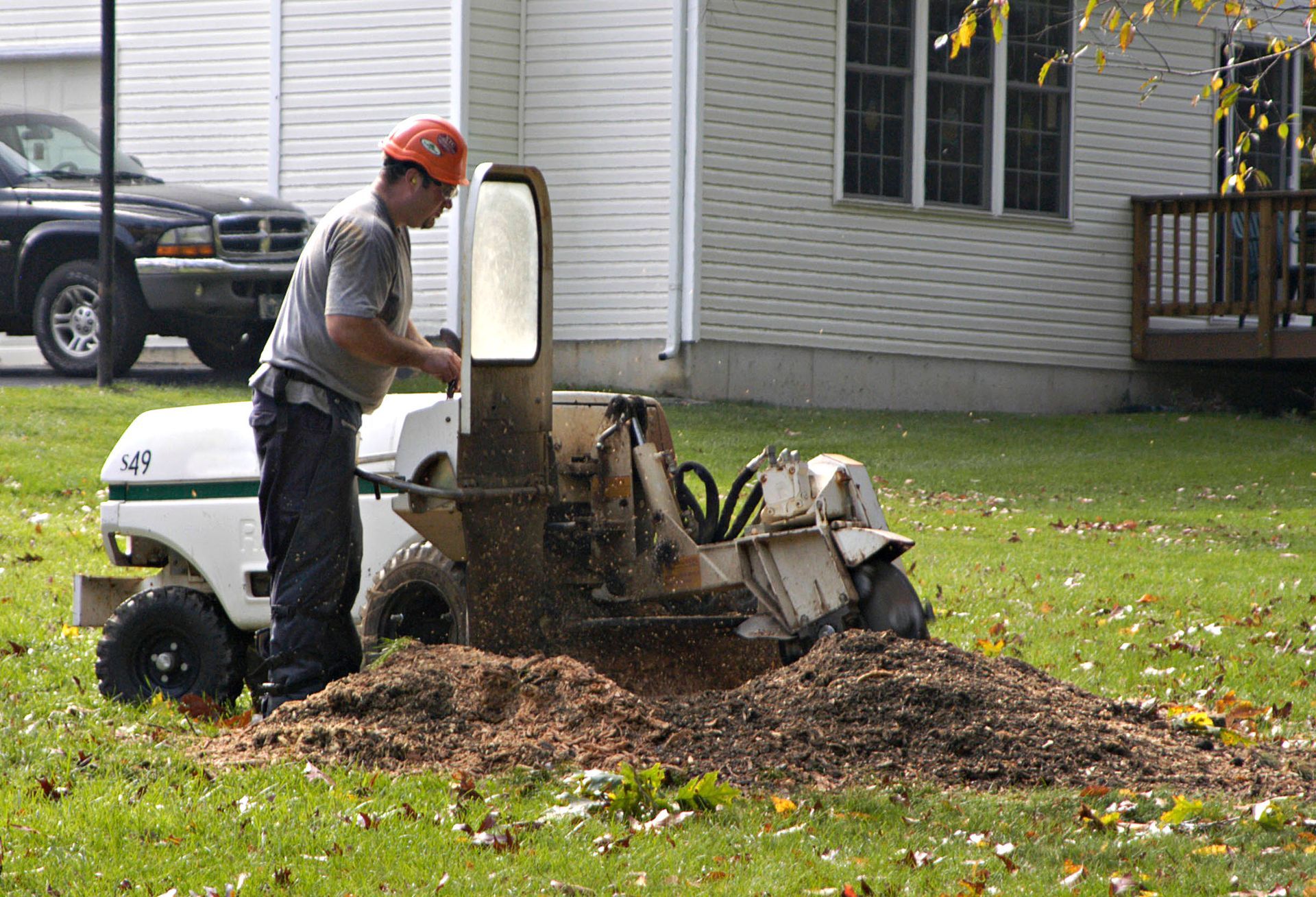
Stump grinding is a highly efficient method of removing the visible part of a tree stump, effectively reducing its above-ground profile. It involves the use of specialized equipment, usually a stump grinder, which chips away at the wood until the stump is ground down to a few inches below the soil surface. This process is minimally invasive and often quicker than total stump removal. Stump grinding leaves the root system intact underground. The approach is perfectly suited to urban and residential settings where minimal disturbance and cost-effectiveness are priorities. According to Business Research Insights, tree trimming services, which often include stump grinding, make up 40% of the global residential tree services market, emphasizing its widespread application and trust among homeowners seeking professional local tree services.
Evaluating Key Benefits of Stump Grinding
Stump grinding offers a variety of advantages that make it a popular choice among homeowners. A primary benefit is its cost-effectiveness compared to complete stump and root removal. Due to its straightforward nature, stump grinding typically requires less time and fewer resources, translating to savings for homeowners. Moreover, the process effectively reduces the potential for pest infestations that might be attracted to decaying stumps. Experienced local tree services recommend this method to retain the overall landscape's integrity, as there's minimal disruption to the surrounding soil and structures.
Reviewing the Drawbacks of Grinding Stumps
Despite its many benefits, stump grinding has certain limitations that may affect its suitability for some landscapes. One of the main drawbacks is that it doesn't remove the entire root system. While the stump above ground is eliminated, the roots beneath can still exist, possibly causing problems if left unchecked, such as pest attraction or soil imbalances. Additionally, the remaining subsurface roots may undergo some level of regrowth, although this is often minimal and varies depending on the tree species.
Identifying Ideal Scenarios for Stump Grinding
Stump grinding is an ideal option for those who prioritize convenience and cost-efficiency. It suits homeowners looking to improve the appearance of their landscape without undertaking extensive excavation or remodeling. If the stump is located in a prominent area of your yard, hiring local tree services to perform grinding provides an immediate visual improvement, removing an unsightly feature. The process is also appropriate when time constraints or budgetary considerations take precedence, offering effective stump management without high investment. For environments where new root growth won't impact existing elements, stump grinding presents a practical solution.
Analyzing Average Costs of Grinding Work
The costs associated with stump grinding vary based on several factors, but it generally remains a cost-effective choice for many homeowners. Primarily, the diameter and number of stumps, as well as their accessibility, dictate the pricing for this service. Larger stumps or those in hard-to-reach areas may incur additional charges due to the increased effort and time required. Generally, rates can also depend on your geographic location and the level of demand and availability of contractors in your area. Despite potential variances, many find stump grinding to be a budget-friendly option compared to complete stump and root removal.
Exploring the Process of Total Removal
Examining What Total Stump Removal Involves
Total stump removal, as opposed to grinding, comprehensively eliminates the stump along with its root system. This extensive process typically involves the use of heavy machinery like a backhoe or excavator to effectively remove both top-level and subsurface structures. The procedure requires digging around the stump, ensuring complete eradication and preventing future root growth or issues that could arise from remaining subsurface matter. Relying on certified local tree services ensures the extraction is managed safely. Due to its invasive nature, total removal can significantly alter the landscape, often requiring restoration efforts post-procedure. This approach provides a blank canvas, perfect for new landscaping endeavors or construction projects demanding clear grounds.
Highlighting Practical Advantages of Total Removal
One of the main advantages of total removal lies in its comprehensive nature, offering a complete solution that effectively addresses all remnants of the stump and its root system. This thorough approach greatly reduces the chances of any future complications, such as unwanted suckering or obstacles to new landscaping projects. Full removal ensures a clear, unobstructed area, crucial for homeowners engaged in extensive gardening plans or site developments requiring a pristine foundation. By fully eradicating the stump and roots through dependable local tree services, this method effectively prevents issues like pest infestations, which can occur in decaying organic matter.
Considering Common Disadvantages of Total Removal
Total removal, while comprehensive, is not without its downsides. One of the most significant disadvantages is the high cost relative to alternative methods such as stump grinding. The process's resource-intensive nature often translates into higher expenses due to the manpower, equipment, and time required. These costs can vary dramatically based on the stump's size, location, and surrounding landscape complexity. Particularly in urban areas, where access may be restricted or additional landscaping damage control is required, extra fees become a consideration, potentially straining budgets.
Determining Appropriate Situations for Full Extraction
Deciding when to opt for total removal involves assessing specific yard demands and future landscaping plans. Situations like significant property developments or comprehensive garden redesigns may necessitate full stump elimination. When planting new structures atop old root systems, ensuring no underground obstacles exist is crucial, calling for complete root removal. Reputable local tree services often suggest total stump removal in areas prone to invasive species that pose risks of massive root spread, leading to structural conflicts. This ensures the removal of potential nuisances, aligning well with scenarios seeking to fully transform yard orientation and aesthetics.
Calculating Financial Factors in Total Removal
Total removal tends to demand a different financial framework compared to stump grinding, primarily due to the equipment and labor involved. Typically, the process involves increased costs, accounting for the labor-intensive nature, machinery hire, and potential additional landscaping repairs required. As a result, precise budgeting becomes vital, with exploration into available cost-effective services tailored to total removal. The real costs often extend beyond the simple extraction into additional efforts tied to landscape restoration and waste disposal, all of which add to the initial charges. These integrated elements necessitate a holistic consideration in financial planning, ensuring a secure footing for accommodating unforeseen extra expenditures.
Choosing between stump grinding and complete extraction comes down to your property goals, budget constraints, and upcoming landscaping plans. While stump grinding provides a rapid, minimally invasive, and budget-friendly way to reclaim lawn space, total removal offers a pristine foundation essential for structural installations or deep planting. Partnering with experienced local tree services ensures that your landscape is evaluated accurately and treated using the safest, most effective arboricultural techniques. Ultimately, making the right choice safeguards your yard from pests, restores safety, and preserves your property's long-term beauty.
Reclaim your yard's beauty and eliminate hazardous stumps today by contacting Kono Tree Care to schedule your professional tree and stump removal assessment!